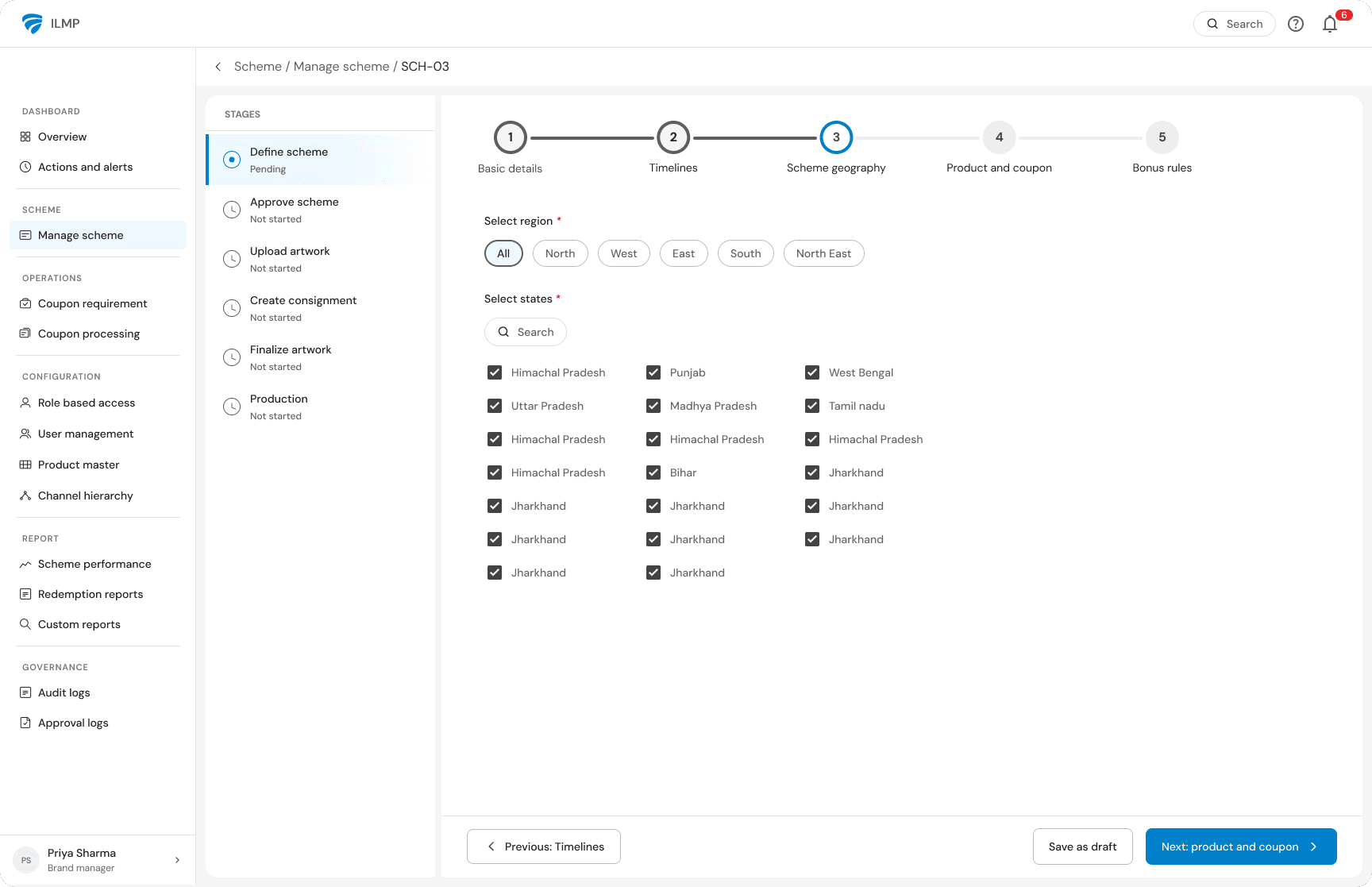
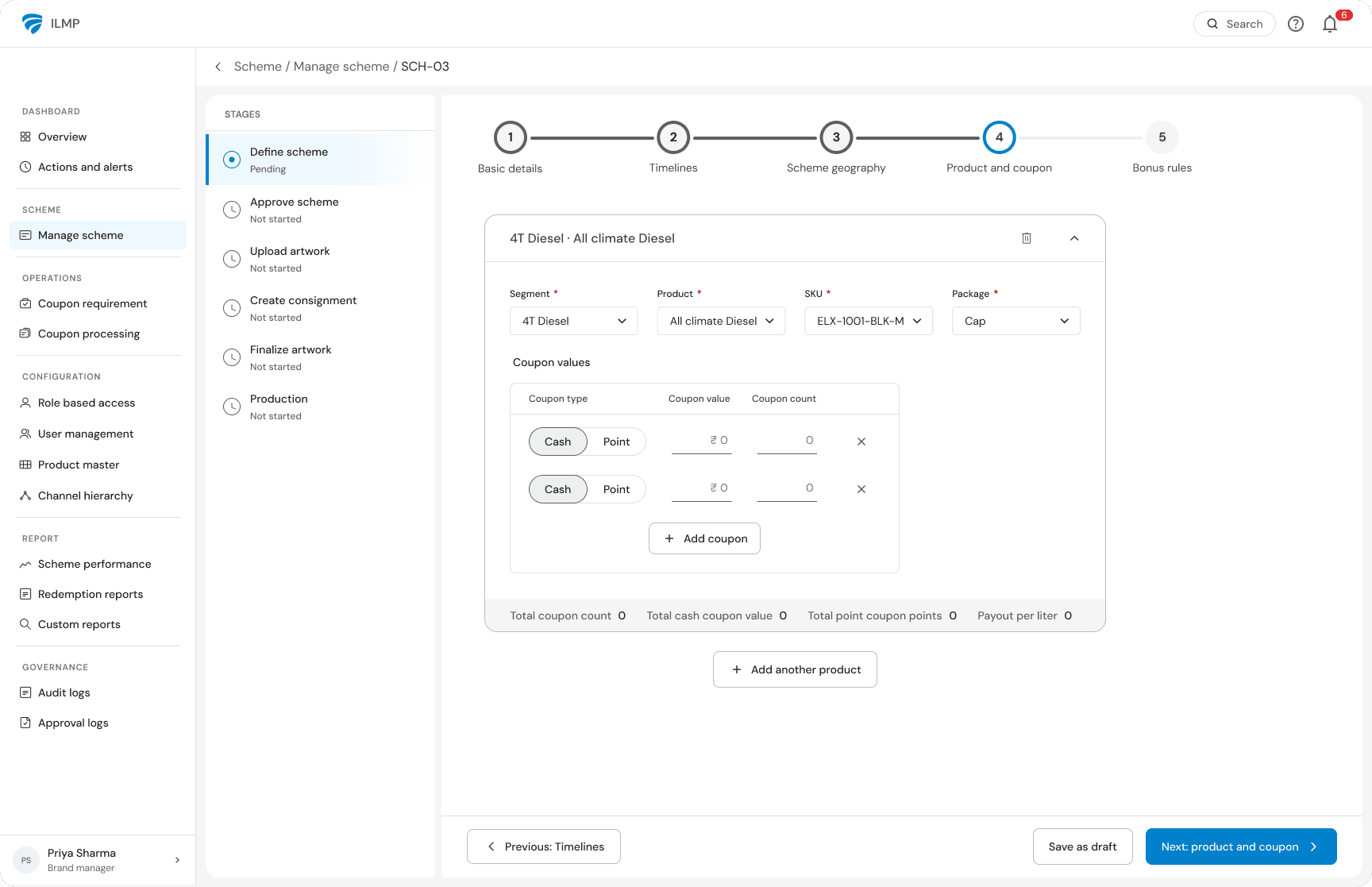
Transformed fragmented scheme creation and execution workflows into a structured, stage-driven system with clear ownership and visibility across actors

Context

ILMP (Name changed for NDA reasons) is a loyalty management system built for industries where purchase decisions are driven by field influencers like mechanics, repair personnel, and micro influencers, not end customers.

The goal is to incentivize these users so they repeatedly choose and recommend the brand.

Scope of the case study

The case study focuses on the upstream system that enables scheme creation across multiple products, SKUs, and geographies, and generates coupons for each scheme.

It covers how these coupons are allocated across a chain of vendors involved in printing and packaging.

These vendors print physical coupons and embed them into different packaging components, which are then integrated into the production process at the factory level and become part of individual product units.
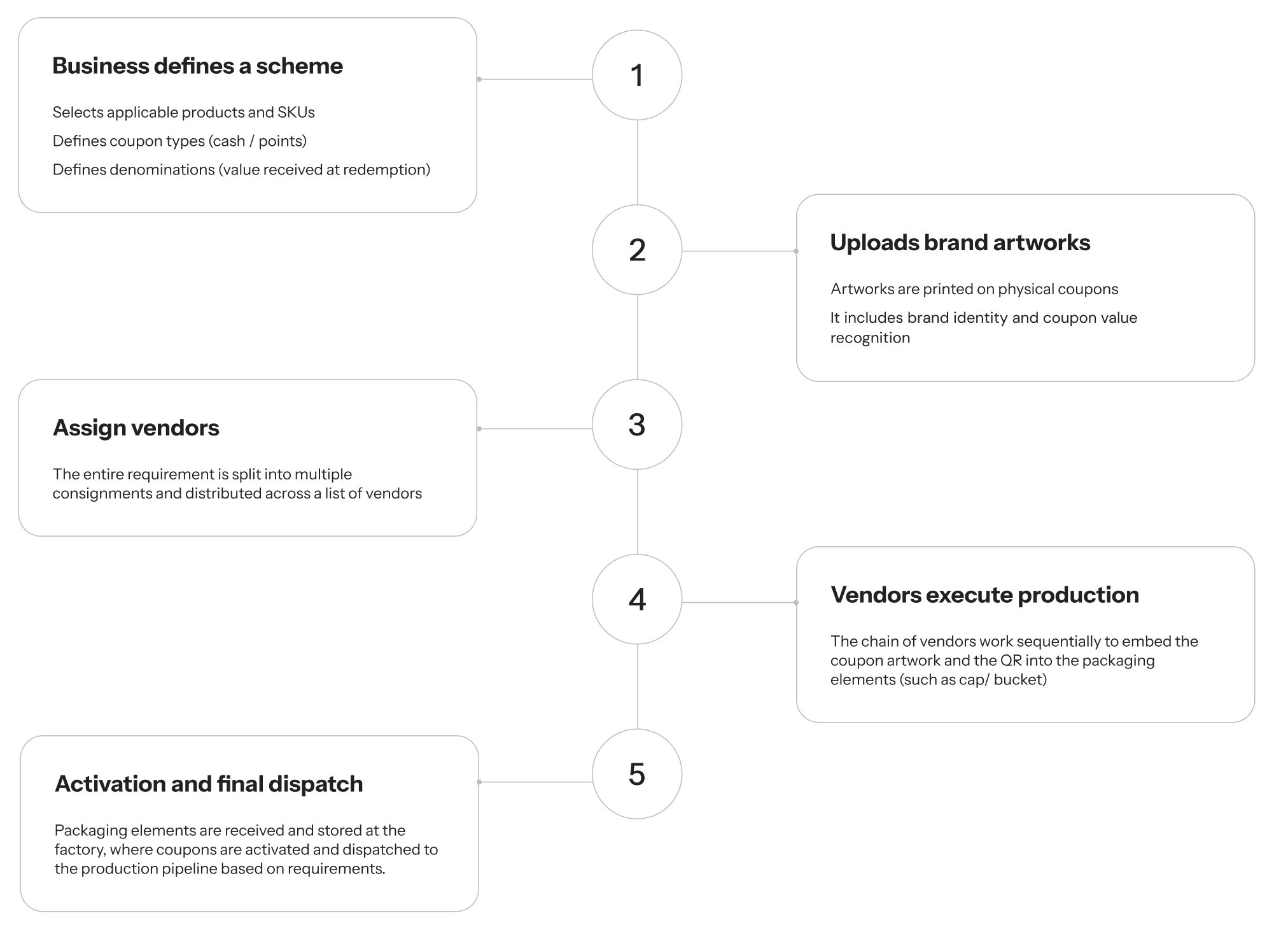
The high level workflow

The high level workflow

The problem

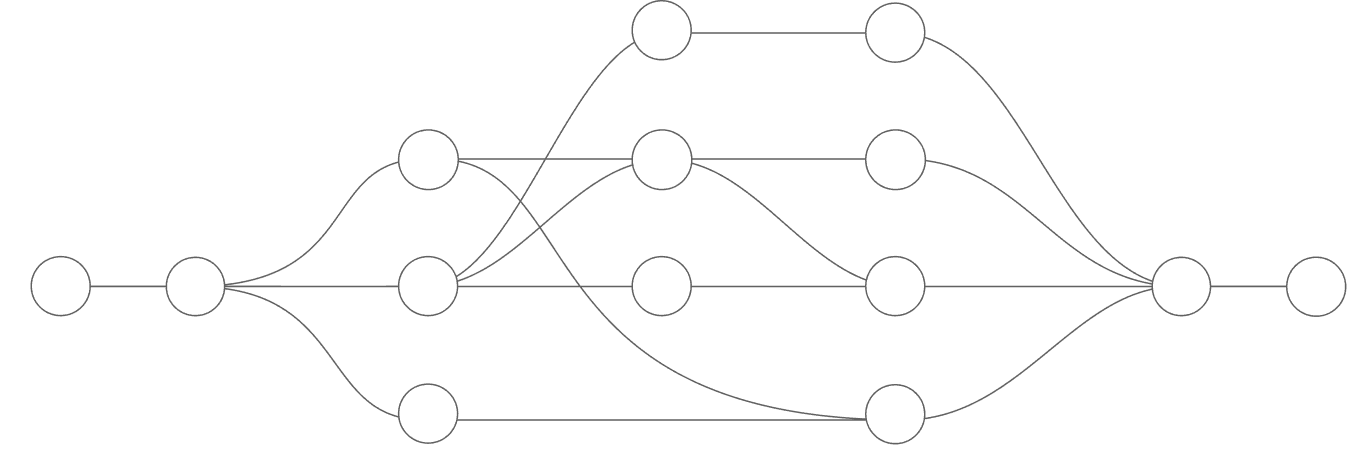
A scheme is defined across multiple stages and stakeholders, but executes as independent coupon units across vendor chains.

These units move asynchronously with dependencies, making execution fragmented and hard to track.

The challenge was to structure this system and enable clear, end to end visibility from definition to execution.
Challenge breakdown

01

Scheme definition stage

02

Scheme execution stage

01

Scheme definition stage

02

Scheme execution stage

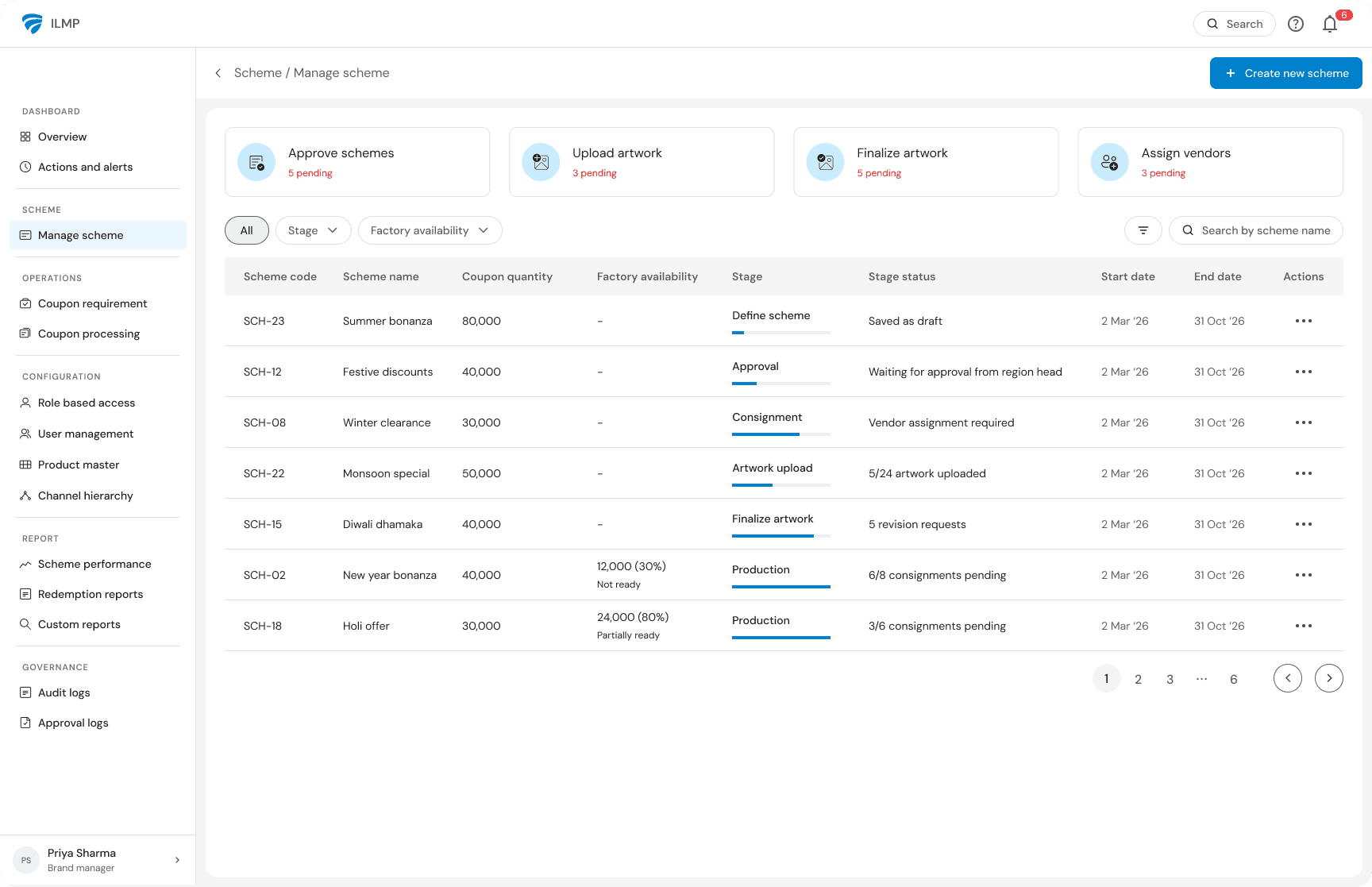
In managing scheme the challenge was to make stage-wise progress and ownership clear at a glance, so users know what needs action and where things are stuck without opening each scheme.

Scheme landing page
Design decisions taken

01

Surfacing pending work

Added top cards that surface schemes with pending actions. They act as quick filters.

Each card is role-specific. Users only see the queues relevant to their role.

This helps them focus on what needs action without scanning the full list.

01

Surfacing pending work

Added top cards that surface schemes with pending actions. They act as quick filters.

Each card is role-specific. Users only see the queues relevant to their role.

This helps them focus on what needs action without scanning the full list.

02

Stage visibility

Each scheme shows its current stage with a small progress indicator.

This makes it easy to see where it is in the lifecycle without opening it.

02

Stage visibility

Each scheme shows its current stage with a small progress indicator.

This makes it easy to see where it is in the lifecycle without opening it.

03

Status clarity

Statuses are tied to the stage, which describes the progress within a stage

Examples like “Approval pending” or “Vendor not assigned” make the next step obvious.

03

Status clarity

Statuses are tied to the stage, which describes the progress within a stage

Examples like “Approval pending” or “Vendor not assigned” make the next step obvious.

Stages are shown as a dedicated list within the scheme. This makes the full lifecycle visible at once and shows what is pending, in progress, or not started.
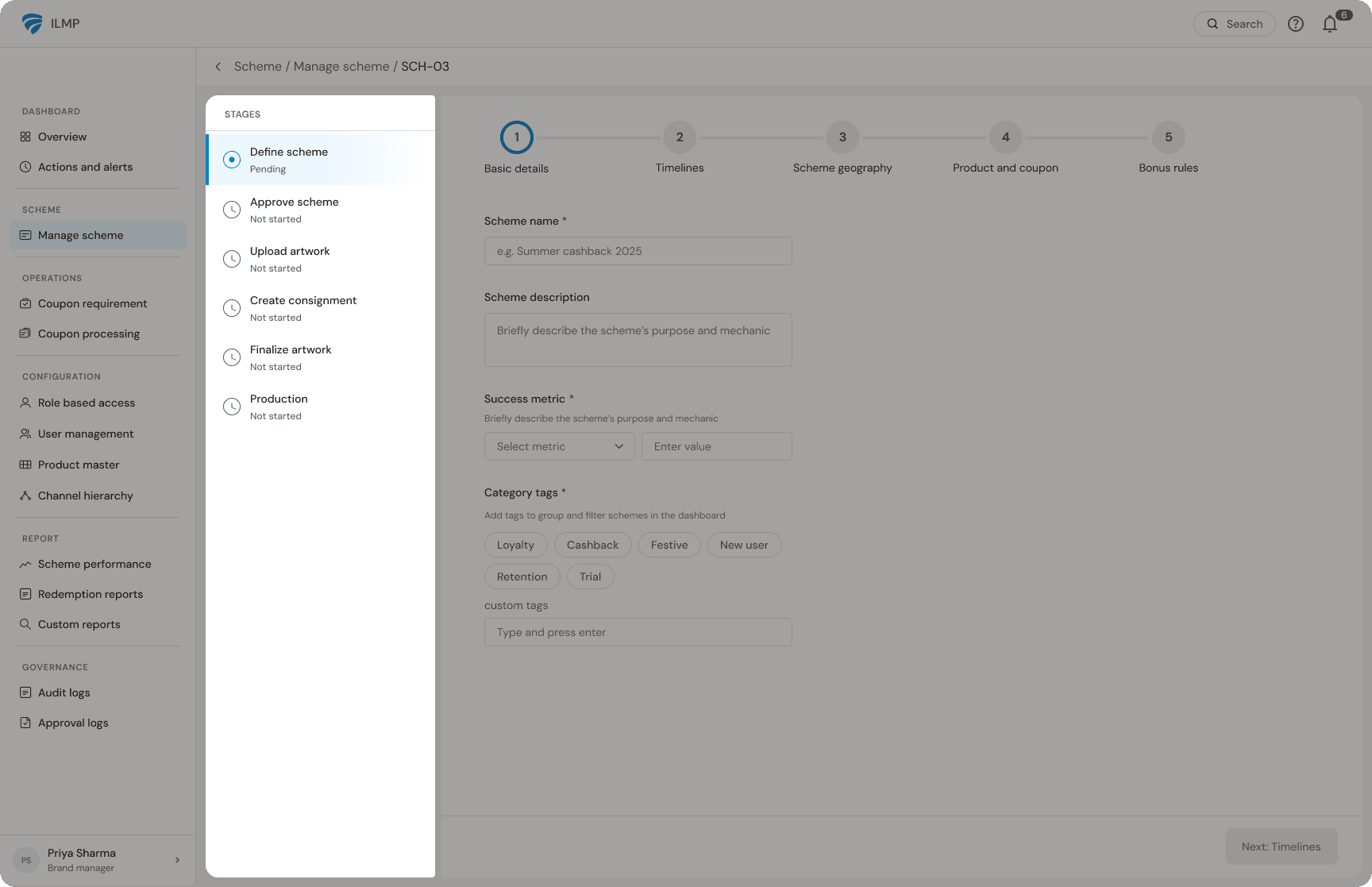
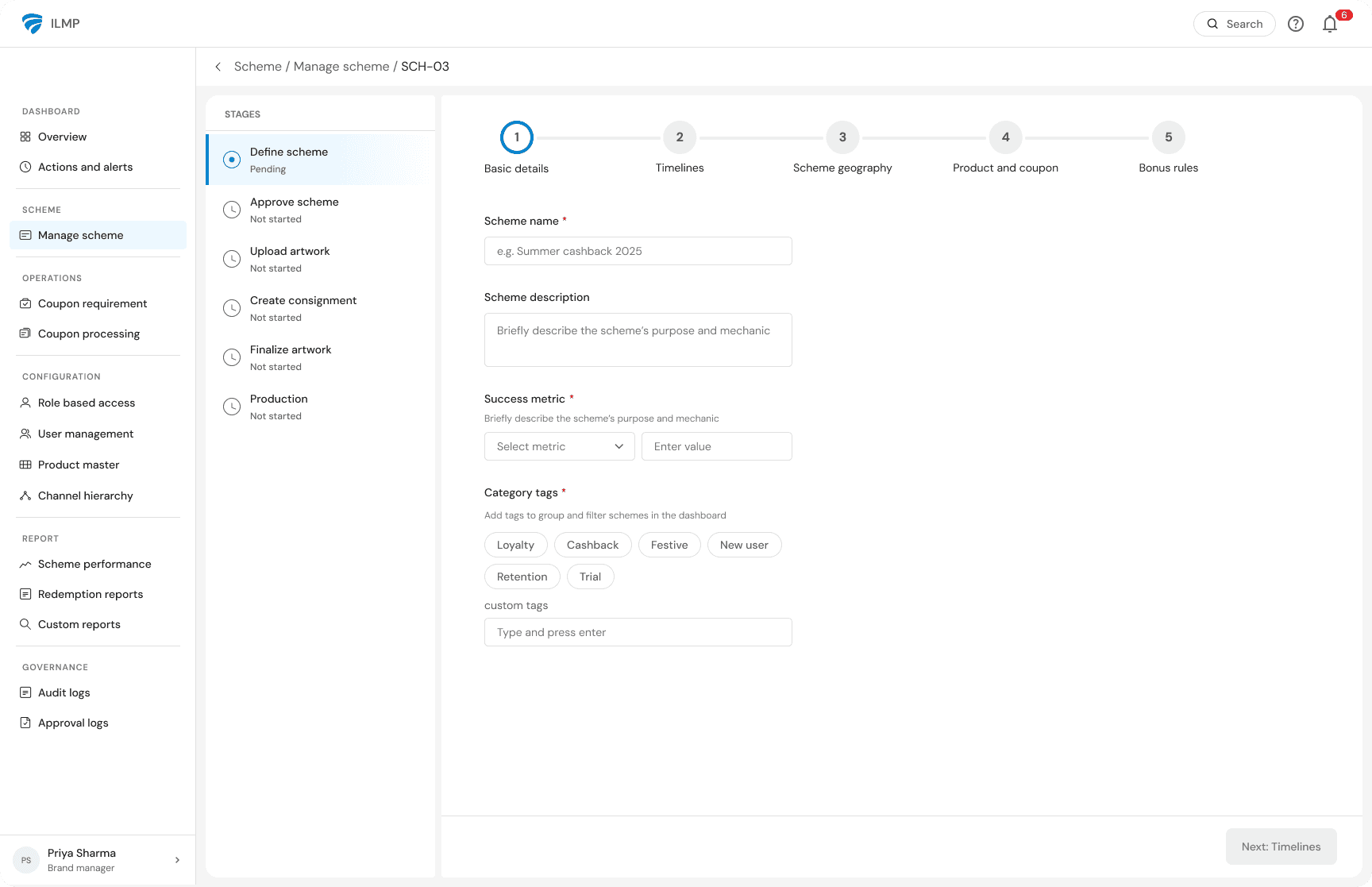
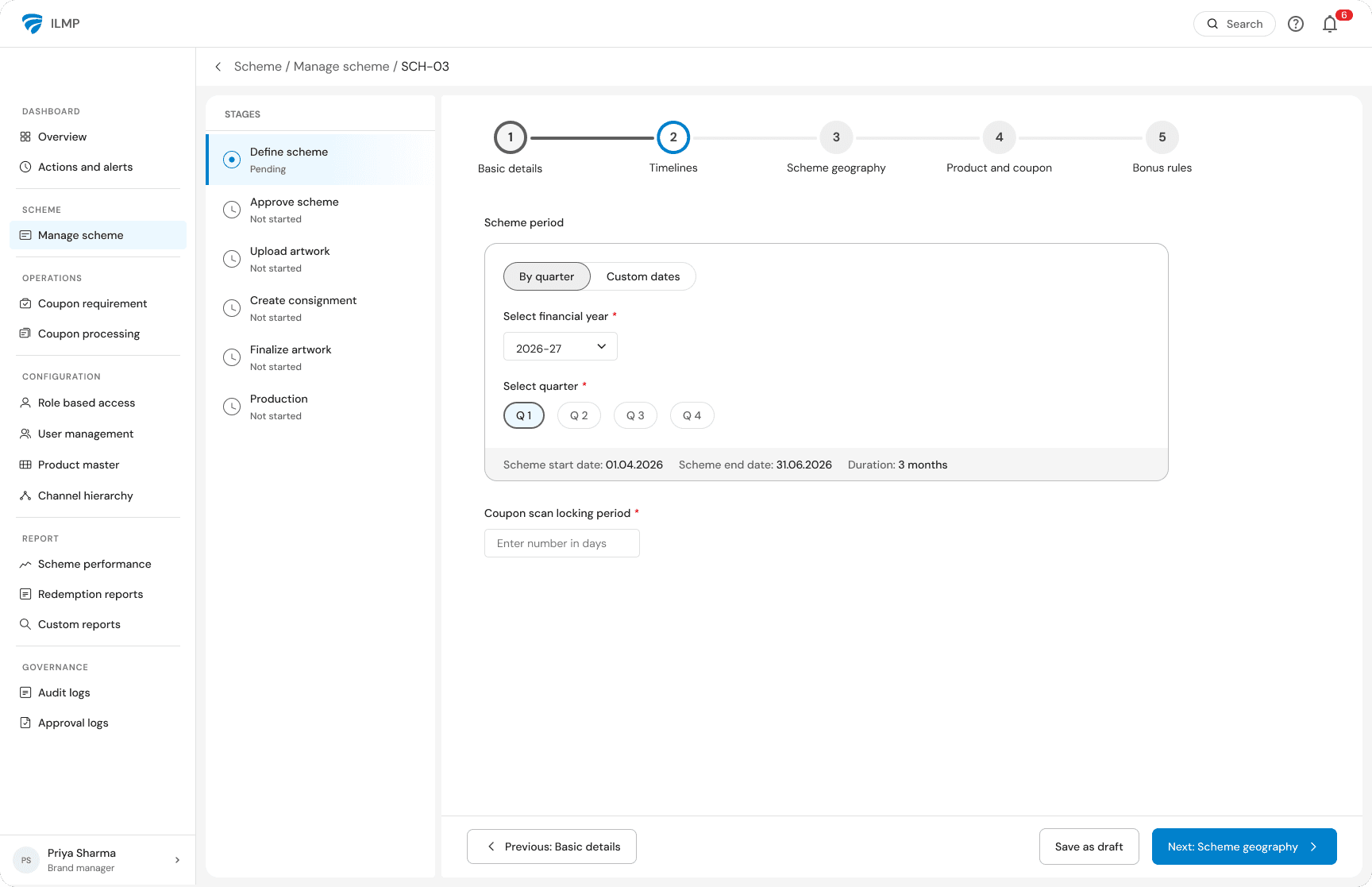
Grouped scheme inputs into five steps around distinct decisions to keep each step focused
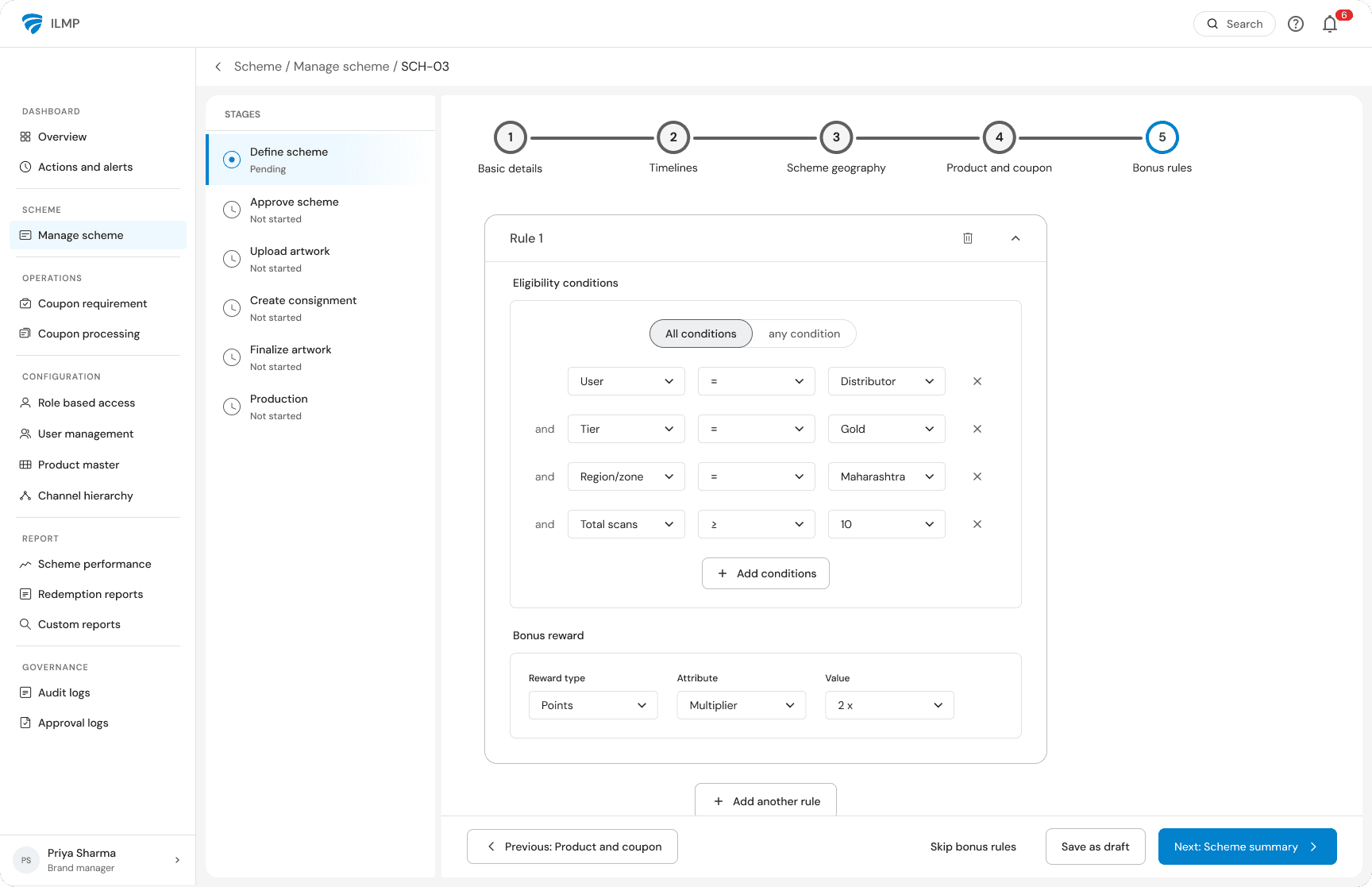
Turned complex incentive logic into simple, readable rules by separating eligibility and outcome

The most critical step was the last step where the bonus rules are defined on top of base coupon values.

Bonus rules mix different conditions like tier, region, and user actions, which makes it easy to miss or misconfigure something.
Defined a simple condition → reward model where each rule clearly shows who qualifies and what they get
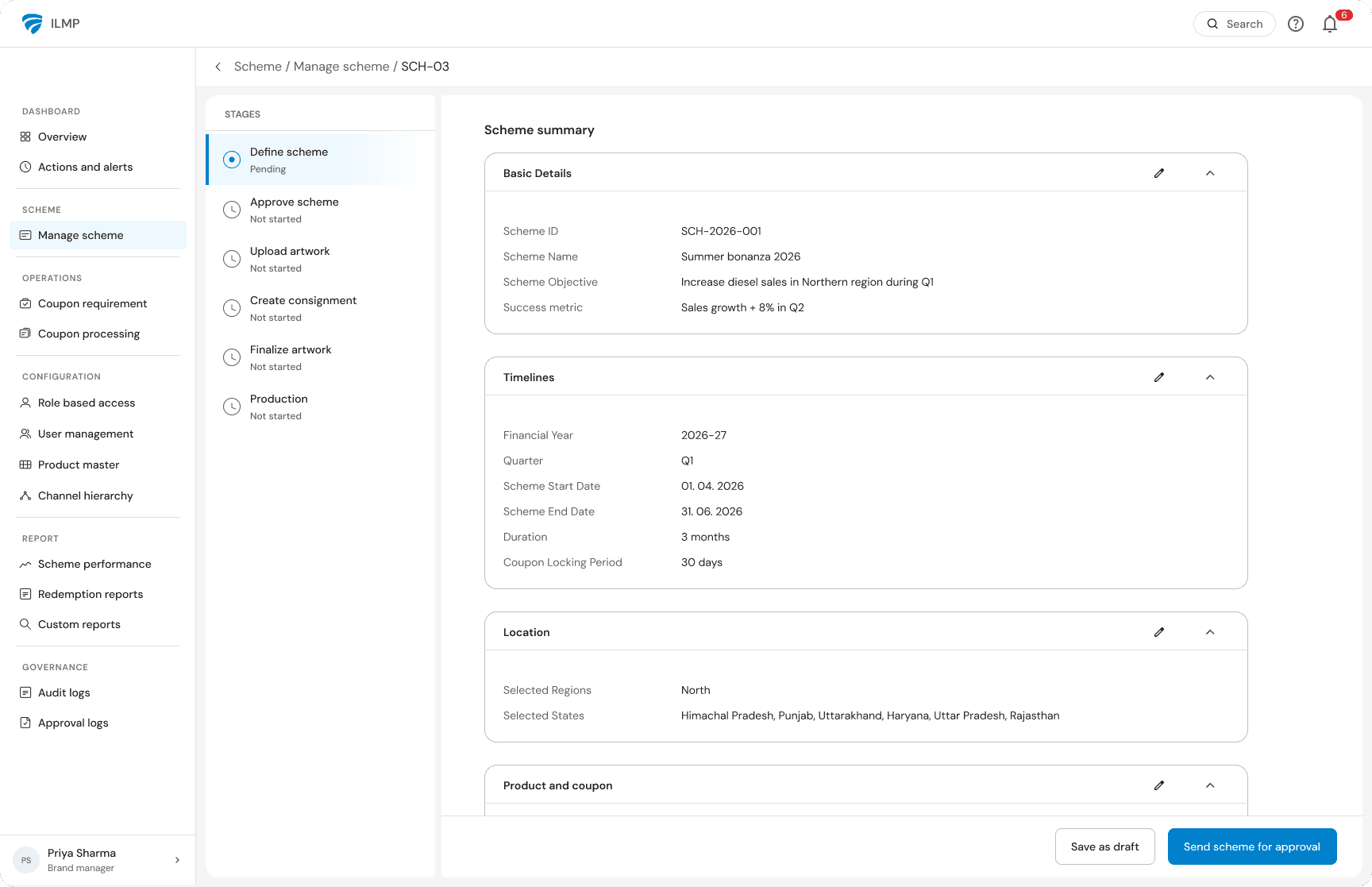
Added a final checkpoint where the entire scheme is visible and can be reviewed and edited if required, before committing
Three models were explored for distributing execution among vendors
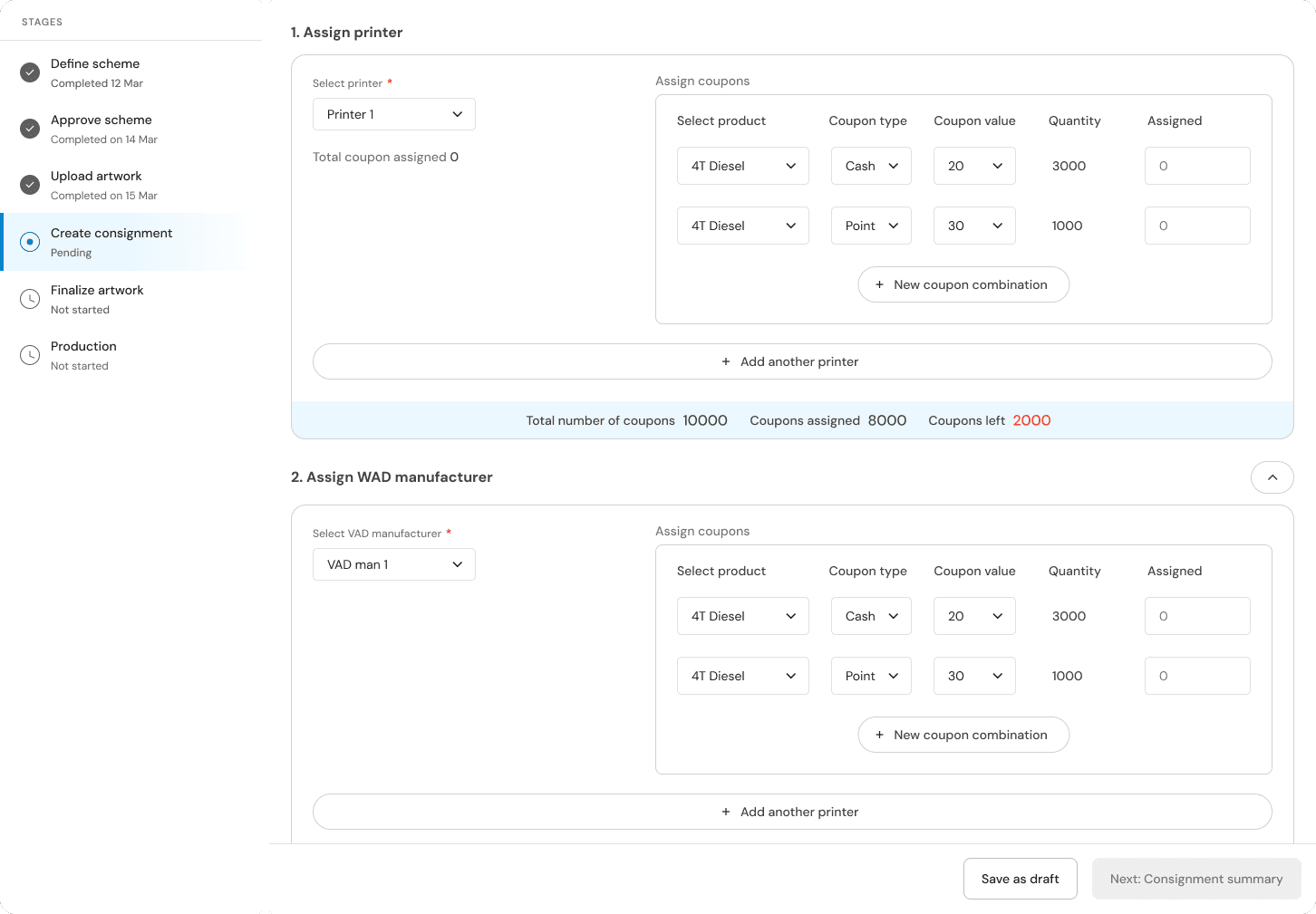
Vendor first

Product first

Consignment based

Vendor first

Product first

Consignment based

Vendor first

Product first

Consignment based

Finally the consignment model was chosen

Execution distributed among vendors through consignments
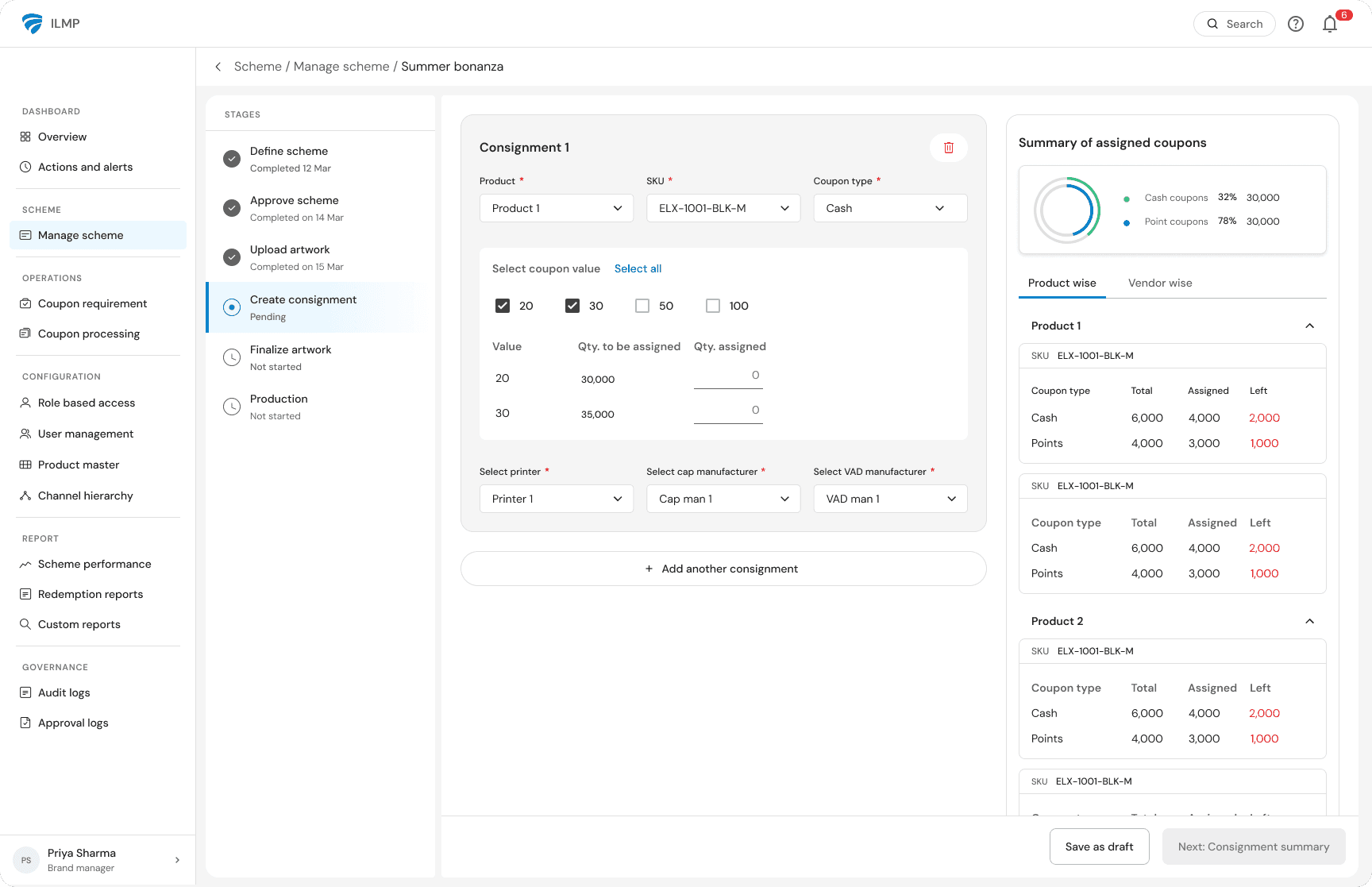
Supporting thought process

01

Keeps tracking simple

One linear chain of vendors for a consignment keeps tracking simple.

01

Keeps tracking simple

One linear chain of vendors for a consignment keeps tracking simple.

02

Flexibility

Multiple consignments can be created allocating to same vendor within a chain.

Also multiple variants can be added for one consignment as well

02

Flexibility

Multiple consignments can be created allocating to same vendor within a chain.

Also multiple variants can be added for one consignment as well

03

Status clarity

As the required coupon quantities are being assigned, the in line product and vendor wise summary and pending quantity reduces effort for recall

03

Status clarity

As the required coupon quantities are being assigned, the in line product and vendor wise summary and pending quantity reduces effort for recall

Vendors access assigned consignments through their portal, carry out production, and dispatch them to the next vendor in the chain.
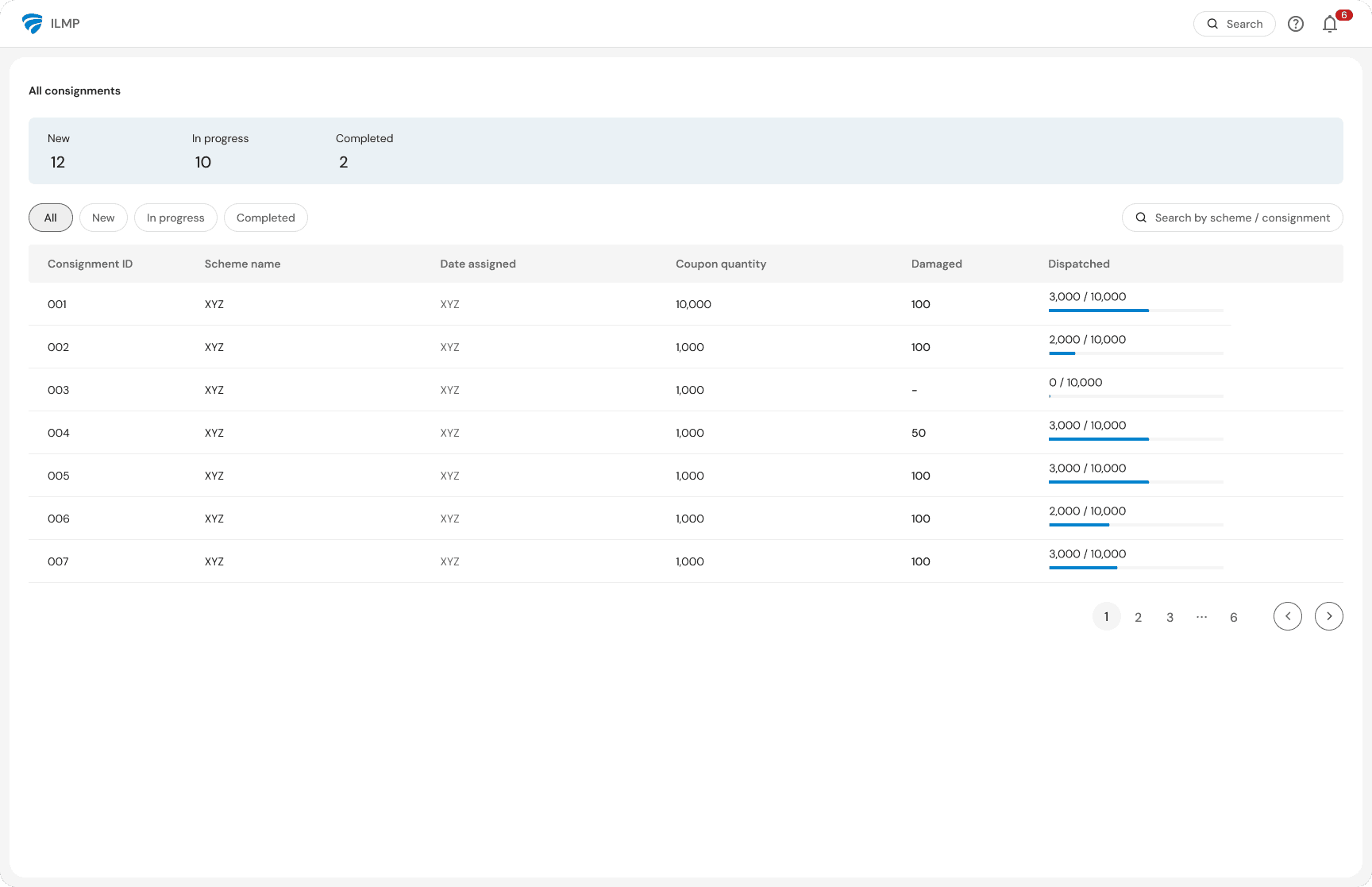
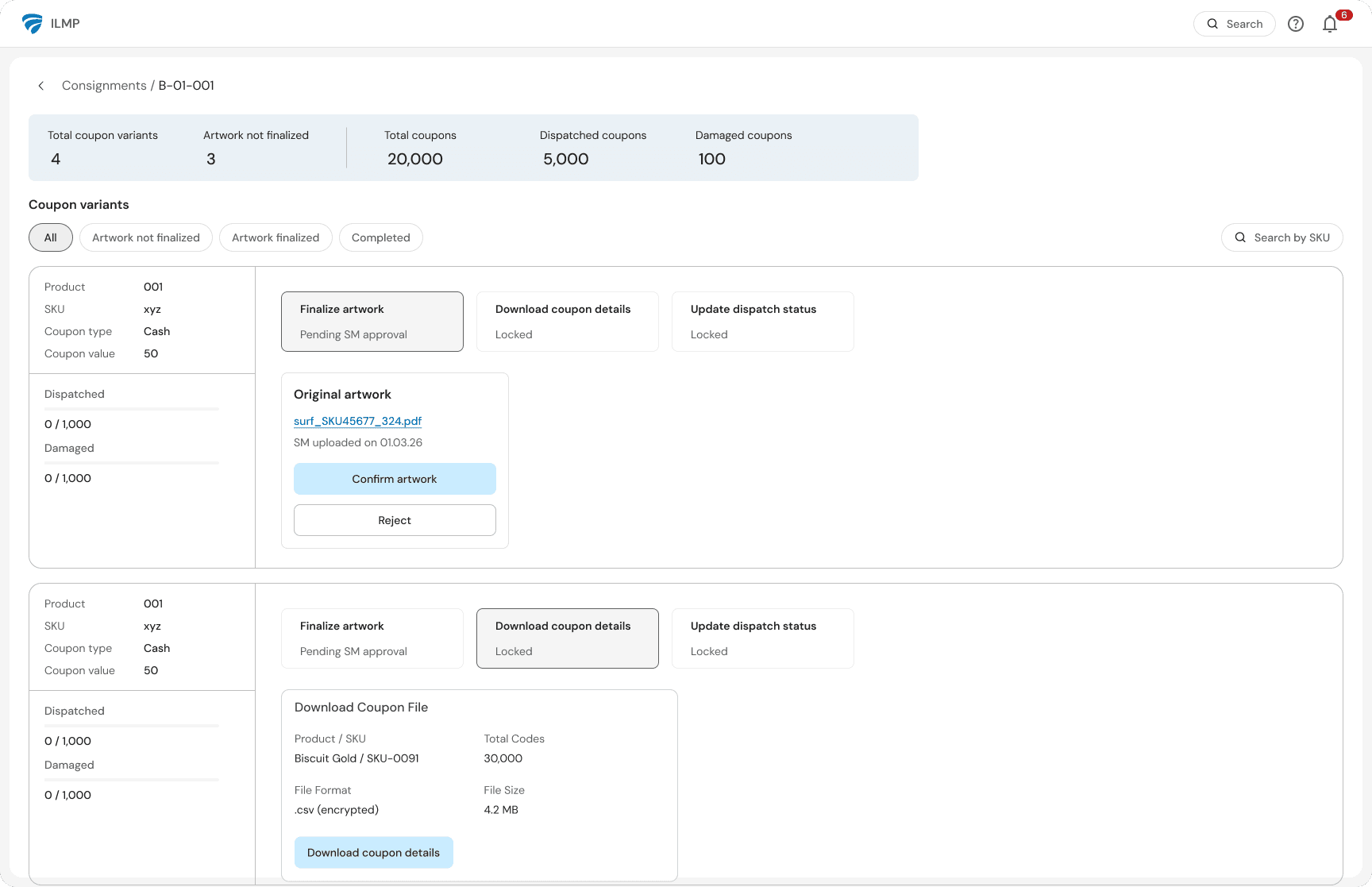
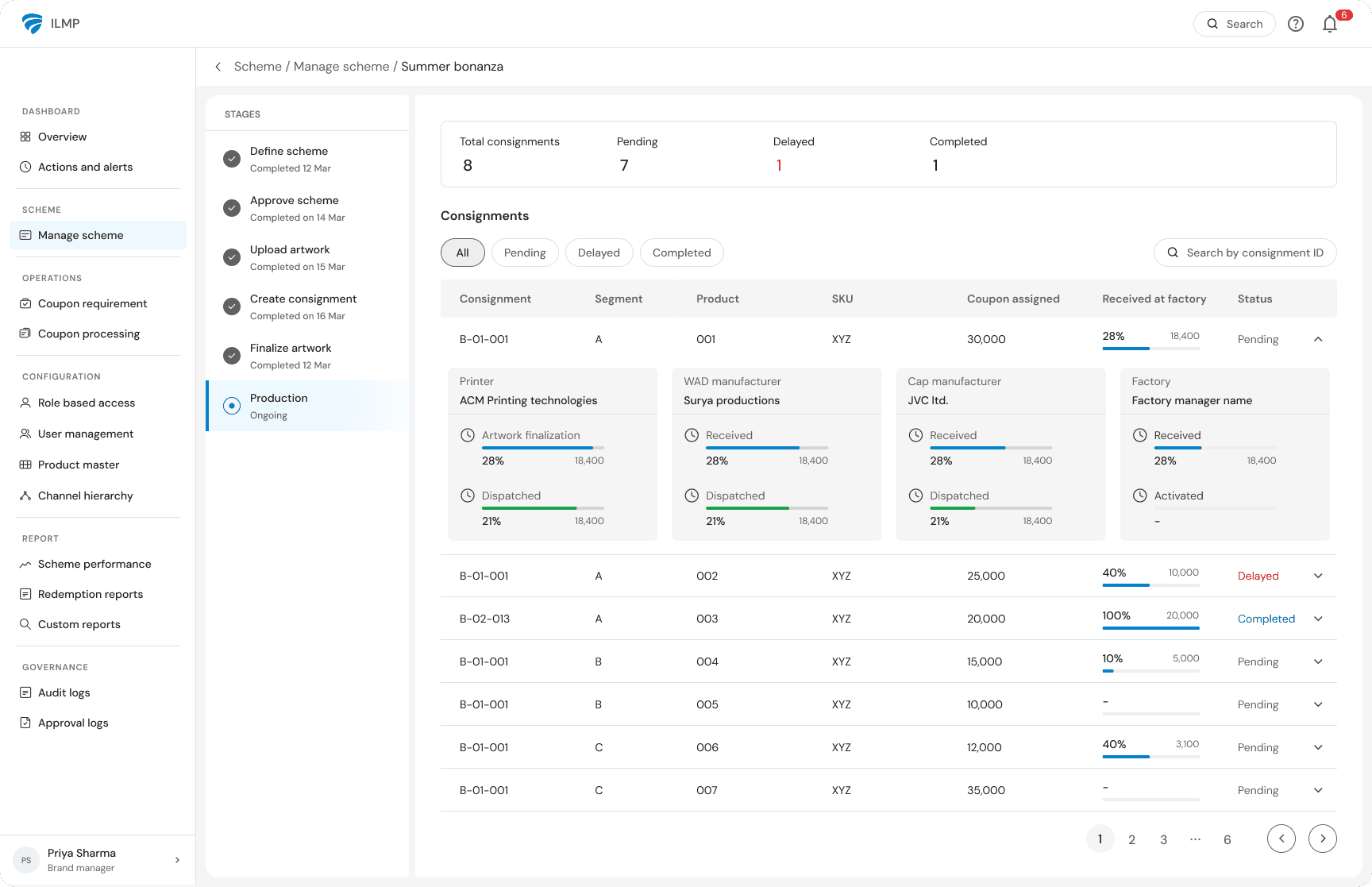
Tracking becomes complex when consignments are created as a single unit, but vendors dispatch them in batches based on operational constraints.

The tracking model was designed in such a way that business users track overall progress through a consignment, while underlying batch movement drives real progress.

This separation allows the system to remain simple at the tracking level while supporting complex execution underneath
Edge cases handled

01

Artwork related conflicts

Some vendors reject the artwork while others approve and are ready to move ahead with production.


This was handled by restricting all vendor working with the same variant, even if one vendor requests a revision. Otherwise there would be non standard artworks for same product

01

Artwork related conflicts

Some vendors reject the artwork while others approve and are ready to move ahead with production.


This was handled by restricting all vendor working with the same variant, even if one vendor requests a revision. Otherwise there would be non standard artworks for same product

02

Bonus rules with very low or no eligible users

A scheme is created with multiple conditions and rewards, but some conditions don’t match any real users or scenarios.

Flagged potentially restrictive conditions in the final scheme summary using backend checks, so users get a clear signal before confirming

02

Bonus rules with very low or no eligible users

A scheme is created with multiple conditions and rewards, but some conditions don’t match any real users or scenarios.

Flagged potentially restrictive conditions in the final scheme summary using backend checks, so users get a clear signal before confirming

One major outcome that was achieved

Reduced execution delays and follow-ups

Clear ownership, stage visibility, and batch tracking removed ambiguity in who needs to act and what’s pending.
Schemes moved faster with fewer manual follow-ups across teams.